
This article covers:
Understated factors influencing dietary choices
Trade-offs leading to food poverty
The issue with an education focused approach
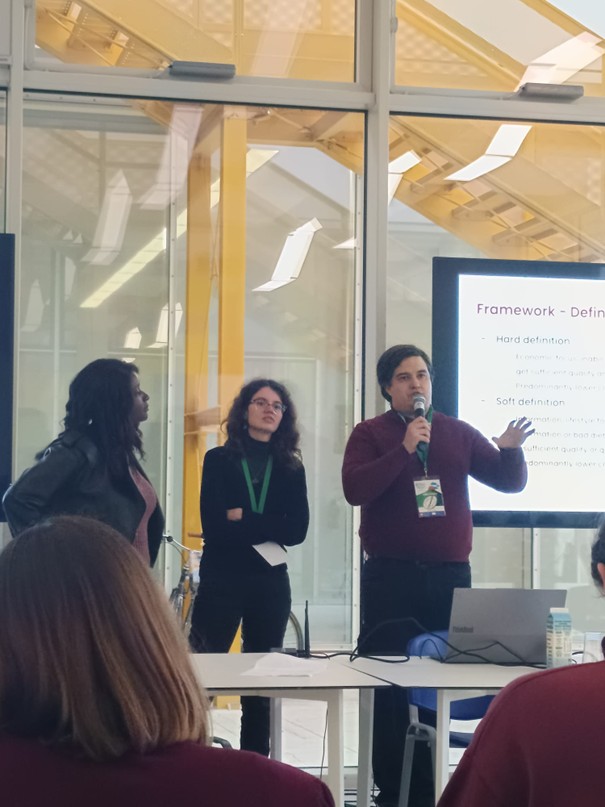
Food poverty, meaning a lack of access to a sufficient quantity or quality of food, is an issue that has increasingly been a subject of discussion in policymaking circles. Earlier this year, I have had the pleasure to go to Bologna and Bentivoglio as a climate ambassador within the CERV CLYMACT project, where along with youth from across the European Union we have learned much about the causes and potential solutions of this issue. One policy approach that seems to be very popular internationally is that of food education, aiming to fix the issue through enlightening those in food poverty to better ways of preparing and eating food. As resource efficient and common sense as it may seem, there are some issues with this perspective.
Food education aims to influence what people eat. It relies on the assumption that those suffering from food poverty – i.e. not eating enough, or eating unhealthy food – are doing so in a significant part because they do not know how to get or cook the ingredients of the meals they would need. First, I will introduce some less commonly considered constraints on how people choose what food to eat, and then I will call these presuppositions into question using a hypothetical example.
The management of time is one of the main activities of modern life. Work both for wages and at home, travel, shopping, sleep and perhaps making time for the people important to us require a careful – if not fully conscious – compartmentalization of the 24 hours of a day, 7 days of a week and 30-ish days of a month. This introduces a pressure against cooking – opting for takeout or frozen meals instead – and to shop at supermarkets, as it is the most time efficient, even if the ingredients and food we can get there are not the healthiest.
Another constraint is effort. When we work, we get money for exercising our capacity to work for a given period of time, doing predetermined tasks. This can be demanding both physically and mentally, and even an 8-hour shift – though many work much longer hours – can be exhausting enough that the prospect of not having to cook at home becomes enticing. It should also be considered that people working physically demanding jobs require a different nutritional mix to be able to do their work, which along with the fact that much of menial labour is paid poorly leads to a situation where they will prefer meals that give them a lot of energy to burn and are cheap over more expensive, harder to prepare, less immediately energizing but healthier meals.
Let us then consider an example. Our example is a fast-food worker who lives in Budapest and works in the downtown area. They work 8-hour shifts 5 days a week – weekdays and weekends – and commute about an hour to and from work counting only the time they spend walking or on public transportation. The work demands an amount of physical effort – the day is spent standing, ingredients must be carried, large trashcans emptied, cleaning to be done – as well as concentration at the till. They earn about 400 thousand forints (1000 euros) including night shift compensations a month. They spend around half of this money on rent and utilities.
They get a free small meal at their job each day as a benefit, as well as employee discounts on the food. They have a Lidl store near their work, but it is often crowded due to being in the busy downtown area, and shopping takes at least half an hour if they don’t have a lot of stuff to get. They are also exhausted after work and don’t often have two consecutive days off, making free time for relaxation precious. We can already clearly see that there are many incentives that would be pushing this person towards not cooking at home for each and every weekday, but instead opting for less healthy alternatives. They have alternatives easier on their relatively tight finances, their time and their tired body. Would food education really help this hypothetical person? Would it help someone who rides the back of a garbage truck, works on a factory line or rides a bike to deliver food?
The fundamental question that needs to be answered before any sort of solution can be considered is this: is food poverty a systemic issue caused by material factors, pressures from outside the individual experiencing it, or is it caused by those individuals simply lacking the knowledge or good sense to find alternative food solutions that are out there somewhere, readily provided by the market? I believe the answer is very much the former.
Photo credits:
Cover banner image: Wikipedia

[1] Find your track. [2] Join our online info session. [3] Apply!
This track provides aspiring diplomats and those interested in international public servants with in-depth knowledge and practical skills essential for a successful career in international relations. Participants will engage in workshops on diplomatic protocol, cultural diplomacy, and science diplomacy, alongside visits to embassies and relevant international organisations. These activities offer hands-on experience and insights into diplomatic practices and international development, helping participants develop the necessary skills and network to excel within international organisations.
Aspiring diplomats – International relations enthusiasts interested in careers in diplomacy, international development, and global cooperation.
International public servants – Students and young professionals interested in pursuing a career at an international organisation like the United Nations, UNESCO, UNHCR, or UNICEF, for example, without necessarily wanting to be a diplomat (i.e. remaining independent of any single nation’s government). Interests may include advancing global peace, international development, and human rights.
[1] Find your track. [2] Join our online info session. [3] Apply!
This track equips aspiring public servants and NGO leaders with the skills and knowledge necessary for impactful community work. Participants will attend workshops on introduction to nonprofit management and civic engagement, effective altruism, social innovation, design thinking, community engagement, and fundraising. Additionally, visits to local NGOs and municipalities will provide practical insights into the functioning and challenges of civic organizations. This track aims to foster effective leadership and innovative thinking in addressing social issues.
(Aspiring) public servants – Students and young professionals who work, or aspire to work, in government departments or local municipalities in their country, and who seek to enhance their skills, network, effectiveness in public administration and ability to improve their communities.
(Aspiring) non-profit founders – Passionate individuals interested in creating and leading non-profit organisations focused on addressing social and environmental issues.
Young changemakers and community organisers – Young leaders dedicated to mobilising communities and fostering grassroots movements to drive social change. This includes environmental advocates committed to promoting sustainable practices and policies to combat environmental issues.


The following roles are currently available:
The role consists of:
Location: This role can be done in Budapest (Hungary) or remotely, from anywhere in the world.
Qualifications: No formal qualifications are required. However, the candidate should have previous demonstrable experience.
Skills and requirements:
The role consists of:
Location: This role can be done in Budapest (Hungary) or remotely, from anywhere in the world.
Qualifications: No formal qualifications are required. However, the candidate should have previous demonstrable experience.
Skills and requirements:
The role consists of:
Location: This role can be done in Budapest (Hungary) or remotely, from anywhere in the world.
Qualifications: No formal qualifications are required. However, the candidate should have previous demonstrable experience.
Skills and requirements:
The role consists of:
Location: This role can be done in Budapest (Hungary) or remotely, from anywhere in the world.
Qualifications: No formal qualifications are required. However, the candidate should have previous demonstrable experience.
Skills and requirements:
The following roles are currently available:
The role consists of:
Location: This role can be done in Budapest (Hungary) or remotely, from anywhere in the world.
Qualifications: No formal qualifications are required. However, the candidate should have previous demonstrable experience.
Skills and requirements:
The role consists of:
Location: This role can be done in Budapest (Hungary) or remotely, from anywhere in the world.
Qualifications: No formal qualifications are required. However, the candidate should have previous demonstrable experience.
Skills and requirements:
The following roles are currently available:
The role consists of:
Produce written or verbal content that is clear and persuasive for our target audience for various platforms in a way that is consistent with our brand strategy and voice (articles, blogs, podcasts, newsletter texts, etc.).
Assist with the development of creative ideas and concepts for advertising, social
media, or crowdfunding campaigns.
Help drive brand consistency across all communication platforms
Location: This role can be done in Budapest (Hungary) or remotely, from anywhere in the world.
Qualifications: No formal qualifications required. However, the candidate should have previous demonstrable experience.
Skills and requirements:
The role consists of:
Location: This role can be done in Budapest (Hungary) or remotely, from anywhere in the world.
Qualifications: No formal qualifications are required. However, the candidate should have previous demonstrable experience.
Skills and requirements:
The role consists of:
Location: This role can be done in Budapest (Hungary) or remotely, from anywhere in the world.
Qualifications: No formal qualifications required, however, the candidate should have previous demonstrable experience.
Skills and requirements:
The role consists of:
Location: This role can be done in Budapest (Hungary) or remotely, from anywhere in the world.
Qualifications: No formal qualifications are required. However, the candidate should have previous demonstrable experience.
Skills and requirements:
The role consists of:
Location: This role can be done in Budapest (Hungary) or remotely, from anywhere in the world.
Qualifications: No formal qualifications are required. However, the candidate should have previous demonstrable experience.
Skills and requirements: